

August 17, 2009
This past week we bid a Metal Composite Material panel project for a university. The bid tabulations are shown below:
Bidder and Amount
- $461,088 – Former service station canopy contractor
- $473,698
- $576,682
- $663,408
- $671,174
- $735,600
- $755,000
- $778,769 – Miller Clapperton (a Premium Certified Fabricator)
- $799,043
- $818,614
- $868,620 – Another Premium Certified Fabricator
- $919,425
- $920,096
This kind of spread is becoming increasingly common as work is being depleted in many areas of construction. When was the last time you saw a new service station being built? With this type of work disappearing, many contractors that had previously worked on relatively simple projects are “bidding up” to institutional type work for universities, hospitals, etc.
This begs the question: “Can a service station canopy contractor do a good job on a university project?” If owners, architects and general contractors want to differentiate the ability of bidders, how can they do that?
Fortunately, a solution exists. The Metal Construction Association has developed the Certified MCM Fabricator Certification Program.


Which Project Requires More Skills?
This program is unique in the construction industry because of its comprehensive nature. To my knowledge, there is no other certification program in the construction industry that combines:
- Experience
- Services
- MCM Systems
- Financial Strength
A fabricator’s performance in each of these areas produces qualification points up to a maximum of 10 per area. A total of 32 points meets the requirements of the program and the fabricator is then awarded the “Premium MCM Fabricator Certification.”
Outlined below is a short description of each of the four areas:
Experience
Experience is defined as the number of consecutive years that a MCM Fabricator has produced a minimum of 150,000 Square Feet of architectural walls per year. One year earns 1 Point and 5 Years earns 10 Points. If a fabricator has been doing this type of work for several years, then they have experienced and solved a variety of application challenges and are more likely to be able to handle a new or challenging application on the subject project.

Home Depot Store Support Center – 560,000 SF over Three Projects and Five Years
Services
In order to do a good job, a fabricator must be able to control the requirements of a project. This area assesses how much control a fabricator has on a project by assigning points for in-house fabrication, installation subcontracts, installation certification program, and in-house engineering. The more components of this area that a fabricator performs himself, the more control he has to assure a quality project will be achieved.
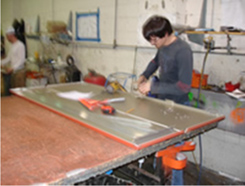
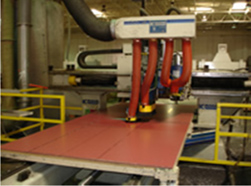
How Many of the Services Does Your Fabricator Actually Perform?
MCM Systems
One of the cornerstone issues for a sophisticated application of MCM Panels is the viability and performance of the “system” for the panels. Systems must be certified to meet stringent industry standards for performance by accredited testing laboratories for Static Air Infiltration, Structural Design Load, and Static Water Infiltration. If a fabricator has invested the time, talent, and money to design and test systems for your project, you can be assured that this company plans to do a good job and that they are heavily invested in the industry they serve.
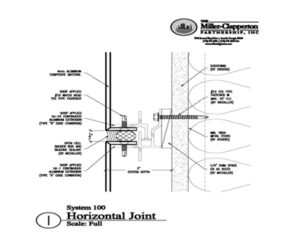
Did Your Fabricator Design and Test Their Systems?
Financial Strength
Do you know of any other construction product that you can purchase for a project that has a requirement for financial strength? Premium MCM Fabricators have been vetted for financial strength. They must be able to provide evidence that they meet the “healthy” ratios for financial conditions as outlined by the CFMA (Construction Financial Management Association) or be able to supply a commitment letter from an A+ rated surety for a payment and performance bond of $4,000,000 or a material supply bond of $2,000,000.

Can Your Fabricator Handle a Financial Challenge?
Bottom Line:
If you are an owner, architect or general contractor:
- How long has your fabricator been making these panels and how many architectural panels have they produced?
- How much of the work do they perform and how much of the work do they “sub out” and to whom do they “sub it out”?
- Do they have tested systems or are they just using angles and caulking the panels?
- Is your fabricator financially strong? In these tough economic times, if he falters what problems will that cause for you?
So, when you receive the very low number on bid day, ask yourself, “What am I getting along with the low price?” If you are an owner and have insisted that your architect specify a Premium Certified Fabricator, you know many of these answers already.
That is it for this week. Post your comments on the Blog and let us stimulate the discussion.
Thanks,
Ted S. Miller